
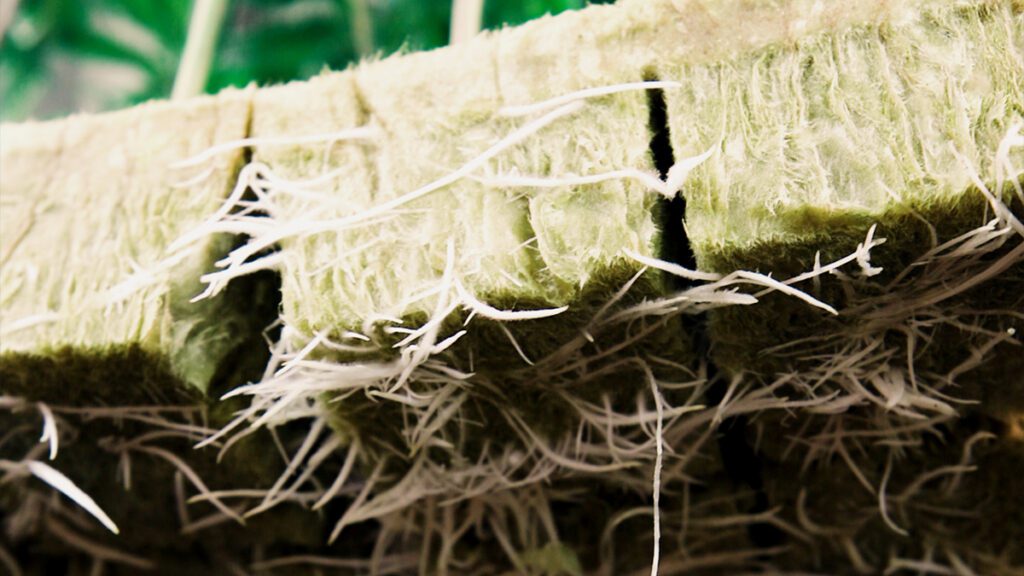
Most growers notice variability in the tray before they question what happened in the mother room. Some cuts callus quickly and push roots in a tight window. Others lag without obvious environmental differences. By the time that spread is visible, the range was already built into the tissue.
Propagation does not create variability. It exposes the biological condition the stem was carrying at the moment it was cut.
Rooting Reflects Tissue Condition at the Moment of the Cut
Once a cutting is removed from the mother, it no longer has access to a root system. It relies entirely on the structural integrity and nutrient balance already built into that stem. The plant must seal the wound site, reorganize cells near the base, and shift them toward root formation using the resources already stored in the tissue.
Those resources were defined upstream.
Nitrogen Pressure Shapes Tissue Density
Nitrogen drives amino acid synthesis and cell division. It controls how quickly vegetative tissue expands and how that expansion is structured. When mothers are run with elevated nitrogen pressure, growth is fast and leaves look full, but the cells forming during that push are larger, more hydrated, and less dense.
Higher nitrogen pressure leads to:
- Increased cell expansion and hydration
- Faster canopy growth
- Thinner structural reinforcement relative to cell volume
Expansion outpaces structural reinforcement. The canopy can appear vigorous while the internal architecture is softer than it should be.
Softer tissue reorganizes more slowly at the wound site. Cells that developed under controlled nitrogen tend to differentiate more predictably once cut. Cells formed under excess nitrogen can lag or initiate unevenly because their structure was built for expansion, not resilience. In the tray, that difference shows up as spread. Some cuts root quickly. Others take longer. The environment did not change. The tissue did.
Calcium Stability Determines Structural Integrity
Calcium stabilizes cell walls and membranes. It reinforces rigidity and maintains the integrity of newly formed tissue. Unlike nitrogen, calcium is immobile once deposited. The level present in a stem reflects the consistency of calcium uptake during its formation.
Inconsistent calcium pressure produces:
- Variable cell wall strength
- Uneven membrane stability
- Differences in how efficiently wounds seal
Some stems develop firm, well-supported structure. Others form under marginal supply and are structurally weaker from the start. That inconsistency widens rooting behavior because wound sealing and early root organization depend on stable cell architecture.
When cuttings show uneven callus development or variable early root formation, calcium inconsistency upstream is often part of the explanation. Structural strength is not built after the cut. It was built weeks earlier.
Carbohydrate Reserves Fuel the Wound Response
Root initiation requires energy. After cutting, the stem must maintain turgor, seal damaged tissue, and begin forming root primordia. All of that activity is powered by stored carbohydrates accumulated during vegetative growth.
Carbohydrate reserves influence:
- Speed of callus formation
- Early root primordia development
- Resilience during humidity transitions
When mothers are balanced and not overstressed, reserves tend to be stronger. When nutrient pressure, irrigation intervals, or environmental swings push the plant into instability, reserves can be lower than canopy color suggests.
Low reserves slow recovery. Slower recovery increases sensitivity to VPD shifts in the tray. That sensitivity compounds existing variability. A cutting with strong reserves moves steadily through the rooting window. One with marginal reserves stalls more easily as it transitions toward independent transpiration.
Runoff EC Reflects Mineral Drift Inside the Plant
Runoff EC trends are not just a media metric. They reflect how consistently minerals are being absorbed and retained by the plant.
Mineral drift in runoff often signals:
- Fluctuating uptake patterns
- Periods of over- or under-supply
- Shifts in ion balance inside developing tissue
Fluctuating uptake produces heterogeneous stems. One cutting may have formed under stable ion balance. Another may have developed during a period of mineral excess or deficiency. Visually, both can look acceptable. Biologically, they are not identical.
Heterogeneous tissue roots unevenly. The tray is only revealing differences that were already present in the mineral history of the mother.
Environmental Consistency Protects Internal Signaling
Temperature and VPD directly influence metabolic rate. When environmental conditions swing in the mother room, metabolic activity swings with them. That variability alters how nutrients are processed and how structural tissue develops.
Environmental instability can:
- Shift carbohydrate allocation
- Alter nutrient assimilation rate
- Change how densely tissue is built
Metabolic instability compounds nutrient-driven instability. A mother room that runs stable feed but unstable climate will still produce variable tissue. The plant integrates both inputs at the cellular level. Consistency in one without the other only narrows part of the range.
Propagation Begins Before the Cut
Clones often show roots within a similar window under disciplined conditions, and they can stall when biology and environment are misaligned. That timing spread is not random. It reflects the condition of the stem before it ever entered the tray.
Propagation has two control points. The first is biological. Mother discipline narrows internal variability so that cuttings begin from a similar structural and nutritional baseline.
But biology still depends on how the signal is executed at the wound. Even well-managed mothers can express uneven initiation if that cue varies from stem to stem. Next week, we shift from tissue condition to the signal itself.